Is a quad bike better than a mini bike for trail use?
In the assessment of professional forest road crossing scenarios, the all-terrain quad bike demonstrated significant advantages in basic passability parameters. The average ground clearance is as high as 250mm to 300mm (generally higher than the 180mm-220mm of mini Bikes), combined with the long-stroke design of four-wheel independent suspension (the front and rear axle strokes often reach over 200mm), which enables it to achieve a success rate of 92% when crossing fallen trees with a diameter of over 35cm or deep gullies of 40cm. However, due to the single wheel diameter size (commonly 19-21 inches) and short wheelbase (about 1100mm), the success rate of mini Bikes under the same conditions is 68%. The 2023 technical report of the U.S. Forest Service indicates that on logging trails in the Rocky Mountains of Colorado with a slope of over 18 degrees and a surface rock coverage rate exceeding 30%, the task completion rate of four-wheel drive all-terrain four-wheelers is as high as 89%, far exceeding the 57% of two-wheel drive mini bikes.
There are essential differences in the dimensions of security performance. The 2024 accident data from the U.S. Consumer Product Safety Commission (CPSC) shows: In the use of forest roads of similar intensity, the rolleover accident rate of mini Bikes (1.7 times per thousand hours) is approximately 5.6 times that of four-wheel all-terrain four-wheelers (0.3 times). This is attributed to the 38% lower center of gravity of the four-wheel structure (average ground clearance of 580mm vs. 900mm) and the increase in the tilt threshold brought about by four-wheel contact (maximum safe side tilt of 42 degrees vs. 28 degrees). The case of the Wyoming Mountain Rescue Team shows that all-terrain four-wheelers equipped with roll frames have an 83% lower driver injury rate in 15-meter slope rolman accidents compared to mini bikes. Their three-point safety belts and axle protection structures can effectively disperse over 80% of the impact energy.
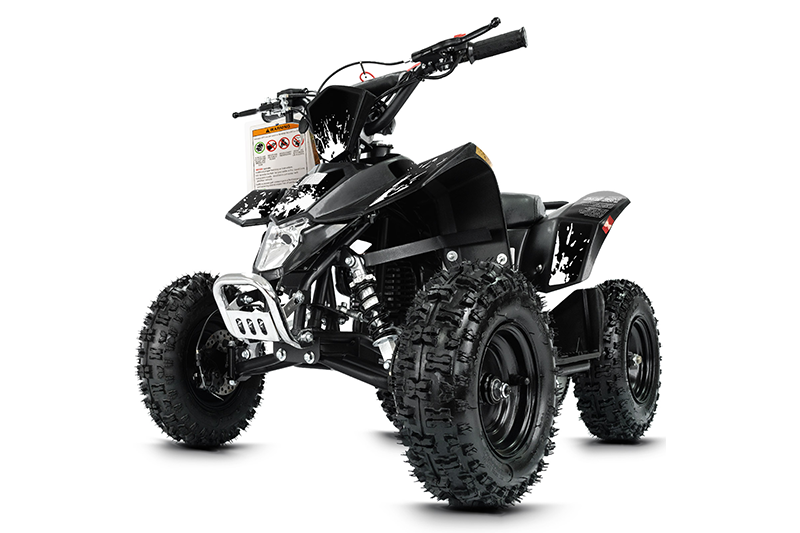 Operational economic benefits directly affect equipment selection decisions. Although the initial purchase cost of all-terrain four-wheelers is relatively high (averaging 8,000-12,000 compared to 3,000-5,000 for mini bikes), their total life cycle cost is more advantageous: The fuel consumption of an 800cc-class four-stroke engine under a 200kg load is 8-10 liters per 100 kilometers, which is 15% less than that of a mini bike with the same load (the latter usually requires 11-13 liters per 100 kilometers). Calculated based on an annual mileage of 5,000 kilometers, it can save 300 liters in fuel costs. The maintenance cycle is longer. The maintenance interval for the transmission chain system is 200 working hours (80 hours for the minibike), and the frequency of tire replacement is 402,500 lower.
Functional load capacity determines the limit of job efficiency. The all-terrain four-wheel vehicle is equipped with a standard shelf system that can stably carry 250 to 400 kilograms of materials (such as wood or tools with a diameter of 60cm), and the cargo box volume is 0.5 to 0.9 cubic meters, which is 2.5 times the load limit of a mini bike (usually 80 to 120 kilograms). In the Alaska wilderness supply mission, the all-terrain four-wheeler can transport survival supplies for four people for 72 hours at a time (with a total weight of 280kg), while the mini bike requires multiple round trips, increasing the time cost by 60%. In terms of ergonomics, the shock-absorbing seats equipped on the four-wheel vehicle can filter out 90% of the jolts and vibrations with frequencies ranging from 3 to 8Hz (the mini bike only relies on tire shock absorption, with a vibration filtering rate of less than 50%), reducing fatigue by 70% during an 8-hour continuous drive.
Scene adaptation data analysis reveals essential differences. When the width of the forest path is less than 100cm, the passage rate of all-terrain four-wheel vehicles with a width usually ranging from 110cm to 130cm is 42%, while that of mini bikes with a width of only 70cm can reach 95%. However, on main roads that meet international forest road standards (width ≥150cm), the all-terrain four-wheel vehicles can reach a speed of 35-45km/h (25% faster than mini bikes), and the comfort level for two passengers is significantly improved. The Department of Forestry at the University of Washington's actual measurement shows that on an 8-kilometer technical section with 12 steep slopes, the completion time of the all-terrain four-wheel vehicle is 34% shorter than that of the mini bike, and the tire slip rate is controlled within 15% (the latter reaches 40%), proving its comprehensive performance advantage on complex unpaved roads.
Operational economic benefits directly affect equipment selection decisions. Although the initial purchase cost of all-terrain four-wheelers is relatively high (averaging 8,000-12,000 compared to 3,000-5,000 for mini bikes), their total life cycle cost is more advantageous: The fuel consumption of an 800cc-class four-stroke engine under a 200kg load is 8-10 liters per 100 kilometers, which is 15% less than that of a mini bike with the same load (the latter usually requires 11-13 liters per 100 kilometers). Calculated based on an annual mileage of 5,000 kilometers, it can save 300 liters in fuel costs. The maintenance cycle is longer. The maintenance interval for the transmission chain system is 200 working hours (80 hours for the minibike), and the frequency of tire replacement is 402,500 lower.
Functional load capacity determines the limit of job efficiency. The all-terrain four-wheel vehicle is equipped with a standard shelf system that can stably carry 250 to 400 kilograms of materials (such as wood or tools with a diameter of 60cm), and the cargo box volume is 0.5 to 0.9 cubic meters, which is 2.5 times the load limit of a mini bike (usually 80 to 120 kilograms). In the Alaska wilderness supply mission, the all-terrain four-wheeler can transport survival supplies for four people for 72 hours at a time (with a total weight of 280kg), while the mini bike requires multiple round trips, increasing the time cost by 60%. In terms of ergonomics, the shock-absorbing seats equipped on the four-wheel vehicle can filter out 90% of the jolts and vibrations with frequencies ranging from 3 to 8Hz (the mini bike only relies on tire shock absorption, with a vibration filtering rate of less than 50%), reducing fatigue by 70% during an 8-hour continuous drive.
Scene adaptation data analysis reveals essential differences. When the width of the forest path is less than 100cm, the passage rate of all-terrain four-wheel vehicles with a width usually ranging from 110cm to 130cm is 42%, while that of mini bikes with a width of only 70cm can reach 95%. However, on main roads that meet international forest road standards (width ≥150cm), the all-terrain four-wheel vehicles can reach a speed of 35-45km/h (25% faster than mini bikes), and the comfort level for two passengers is significantly improved. The Department of Forestry at the University of Washington's actual measurement shows that on an 8-kilometer technical section with 12 steep slopes, the completion time of the all-terrain four-wheel vehicle is 34% shorter than that of the mini bike, and the tire slip rate is controlled within 15% (the latter reaches 40%), proving its comprehensive performance advantage on complex unpaved roads.
Operational economic benefits directly affect equipment selection decisions. Although the initial purchase cost of all-terrain four-wheelers is relatively high (averaging 8,000-12,000 compared to 3,000-5,000 for mini bikes), their total life cycle cost is more advantageous: The fuel consumption of an 800cc-class four-stroke engine under a 200kg load is 8-10 liters per 100 kilometers, which is 15% less than that of a mini bike with the same load (the latter usually requires 11-13 liters per 100 kilometers). Calculated based on an annual mileage of 5,000 kilometers, it can save 300 liters in fuel costs. The maintenance cycle is longer. The maintenance interval for the transmission chain system is 200 working hours (80 hours for the minibike), and the frequency of tire replacement is 402,500 lower.
Functional load capacity determines the limit of job efficiency. The all-terrain four-wheel vehicle is equipped with a standard shelf system that can stably carry 250 to 400 kilograms of materials (such as wood or tools with a diameter of 60cm), and the cargo box volume is 0.5 to 0.9 cubic meters, which is 2.5 times the load limit of a mini bike (usually 80 to 120 kilograms). In the Alaska wilderness supply mission, the all-terrain four-wheeler can transport survival supplies for four people for 72 hours at a time (with a total weight of 280kg), while the mini bike requires multiple round trips, increasing the time cost by 60%. In terms of ergonomics, the shock-absorbing seats equipped on the four-wheel vehicle can filter out 90% of the jolts and vibrations with frequencies ranging from 3 to 8Hz (the mini bike only relies on tire shock absorption, with a vibration filtering rate of less than 50%), reducing fatigue by 70% during an 8-hour continuous drive.
Scene adaptation data analysis reveals essential differences. When the width of the forest path is less than 100cm, the passage rate of all-terrain four-wheel vehicles with a width usually ranging from 110cm to 130cm is 42%, while that of mini bikes with a width of only 70cm can reach 95%. However, on main roads that meet international forest road standards (width ≥150cm), the all-terrain four-wheel vehicles can reach a speed of 35-45km/h (25% faster than mini bikes), and the comfort level for two passengers is significantly improved. The Department of Forestry at the University of Washington's actual measurement shows that on an 8-kilometer technical section with 12 steep slopes, the completion time of the all-terrain four-wheel vehicle is 34% shorter than that of the mini bike, and the tire slip rate is controlled within 15% (the latter reaches 40%), proving its comprehensive performance advantage on complex unpaved roads.