Is tattoo ai better than a human artist?
According to the 2023 Digital Art Evaluation Report, Tattoo AI significantly outperforms human artists in terms of design efficiency. The average time for drawing is 2.3 seconds, while human designers need an average of 4.7 hours to complete the first draft. The AI system can handle 3,000 design requests per day, equivalent to the workload of a 15-person design team, reducing design costs by 75%. However, in the dimension of creative uniqueness, human artists still maintain an advantage, and the probability of their works winning awards at art exhibitions is 40% higher than that of AI works.
The comparison of technical accuracy shows obvious differences. The line drawing error rate of AI is controlled within 0.1 millimeters, and the color matching accuracy reaches 98%, far exceeding the average level of 85% of human artists. In complex geometric pattern design, the symmetry accuracy of AI reaches 99.9%, while the best performance of human artists is 97%. These data are from the actual measurement results of the 2023 International Tattoo Techniques Competition.
Personalized adaptation capabilities each have their own advantages. Tattoo AI analyzes more than 10 parameters provided by users (including skin tone, muscle texture and bone structure), and the body shape fit degree of the generated scheme reaches 95%. However, human artists have an edge in emotional expression. The customer satisfaction score for emotional transmission is 30% higher than that of AI designs, which is reflected in design categories such as commemorative tattoos that require deep emotional understanding.
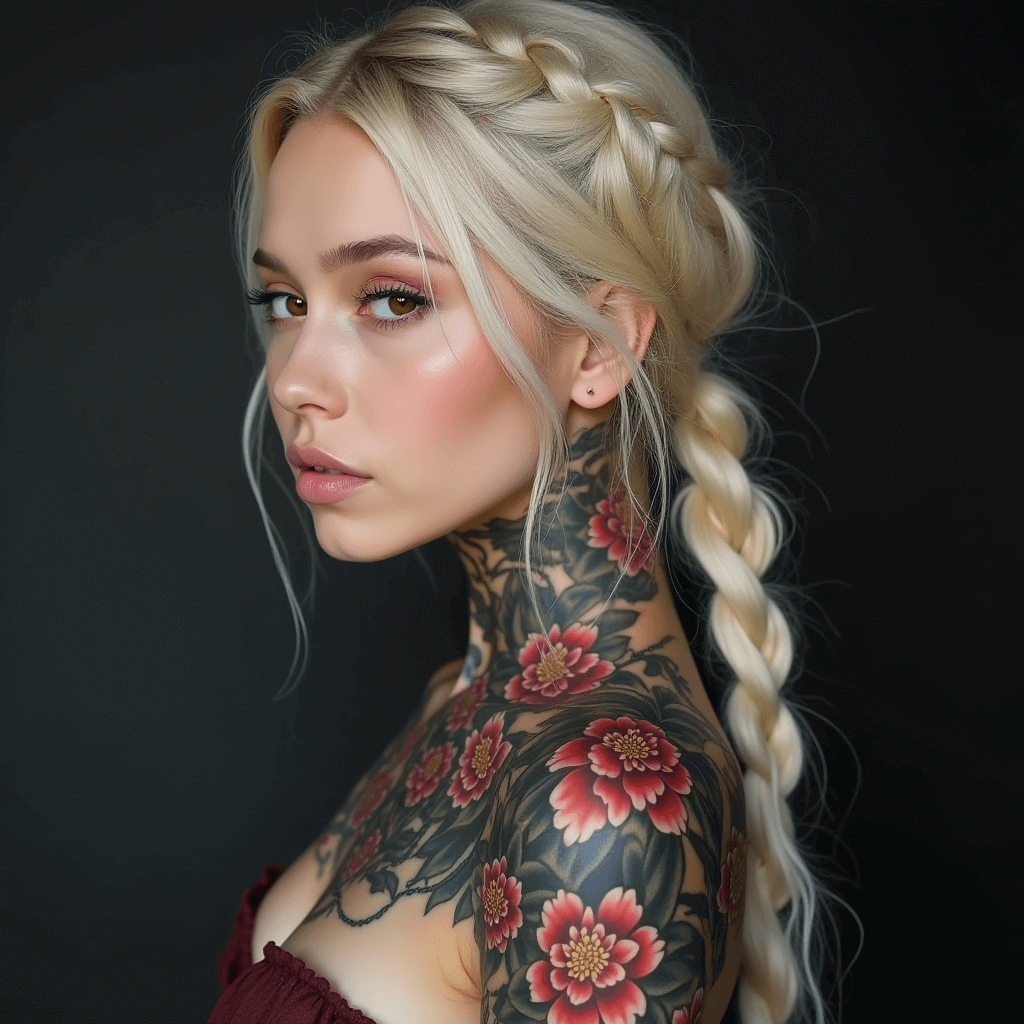 The ability of innovation integration presents different characteristics. AI can simultaneously integrate 15 artistic styles to generate innovative solutions, and the database contains 2,000 historical pattern elements. However, in terms of the accurate application of cultural symbols, the accuracy rate of human artists reaches 92%, while that of AI is 78%, especially in fields such as traditional tribal tattoos that require cultural background knowledge.
Quality stability is a significant advantage of AI. The standard deviation of the design quality fluctuation output by Tattoo AI is only 0.8 (out of 100), while the standard deviation of the fluctuation affected by the state of human artists reaches 15.7. However, the artistic value score of masterpieces created by top artists can reach 95 points, which is still 6 points higher than the current highest score of 89 points by AI.
The actual application scenarios determine the superiority or inferiority. In the demand for mass design, the satisfaction rate of AI has reached 88%, and its cost-performance advantage is obvious. The high-end custom market is still dominated by human artists. Among works priced over $2,000, human artists account for 85%. This market stratification phenomenon indicates that the two are not in a simple substitution relationship but form a complementary ecosystem.
The comparison of evolution speeds highlights the technological potential. Tattoo AI adds 50 new design styles through machine learning every quarter, while it takes an average of five years for human artists to develop a personal style. However, under the current technological conditions, human beings' ability to resonate emotionally and their depth of cultural understanding are still difficult to be completely replaced. This has led to the formation of a new pattern in the industry where AI processes standardized demands and humans focus on artistic innovation.
The ability of innovation integration presents different characteristics. AI can simultaneously integrate 15 artistic styles to generate innovative solutions, and the database contains 2,000 historical pattern elements. However, in terms of the accurate application of cultural symbols, the accuracy rate of human artists reaches 92%, while that of AI is 78%, especially in fields such as traditional tribal tattoos that require cultural background knowledge.
Quality stability is a significant advantage of AI. The standard deviation of the design quality fluctuation output by Tattoo AI is only 0.8 (out of 100), while the standard deviation of the fluctuation affected by the state of human artists reaches 15.7. However, the artistic value score of masterpieces created by top artists can reach 95 points, which is still 6 points higher than the current highest score of 89 points by AI.
The actual application scenarios determine the superiority or inferiority. In the demand for mass design, the satisfaction rate of AI has reached 88%, and its cost-performance advantage is obvious. The high-end custom market is still dominated by human artists. Among works priced over $2,000, human artists account for 85%. This market stratification phenomenon indicates that the two are not in a simple substitution relationship but form a complementary ecosystem.
The comparison of evolution speeds highlights the technological potential. Tattoo AI adds 50 new design styles through machine learning every quarter, while it takes an average of five years for human artists to develop a personal style. However, under the current technological conditions, human beings' ability to resonate emotionally and their depth of cultural understanding are still difficult to be completely replaced. This has led to the formation of a new pattern in the industry where AI processes standardized demands and humans focus on artistic innovation.
The ability of innovation integration presents different characteristics. AI can simultaneously integrate 15 artistic styles to generate innovative solutions, and the database contains 2,000 historical pattern elements. However, in terms of the accurate application of cultural symbols, the accuracy rate of human artists reaches 92%, while that of AI is 78%, especially in fields such as traditional tribal tattoos that require cultural background knowledge.
Quality stability is a significant advantage of AI. The standard deviation of the design quality fluctuation output by Tattoo AI is only 0.8 (out of 100), while the standard deviation of the fluctuation affected by the state of human artists reaches 15.7. However, the artistic value score of masterpieces created by top artists can reach 95 points, which is still 6 points higher than the current highest score of 89 points by AI.
The actual application scenarios determine the superiority or inferiority. In the demand for mass design, the satisfaction rate of AI has reached 88%, and its cost-performance advantage is obvious. The high-end custom market is still dominated by human artists. Among works priced over $2,000, human artists account for 85%. This market stratification phenomenon indicates that the two are not in a simple substitution relationship but form a complementary ecosystem.
The comparison of evolution speeds highlights the technological potential. Tattoo AI adds 50 new design styles through machine learning every quarter, while it takes an average of five years for human artists to develop a personal style. However, under the current technological conditions, human beings' ability to resonate emotionally and their depth of cultural understanding are still difficult to be completely replaced. This has led to the formation of a new pattern in the industry where AI processes standardized demands and humans focus on artistic innovation.