What Is a Beer brewery system and How Does It Work?
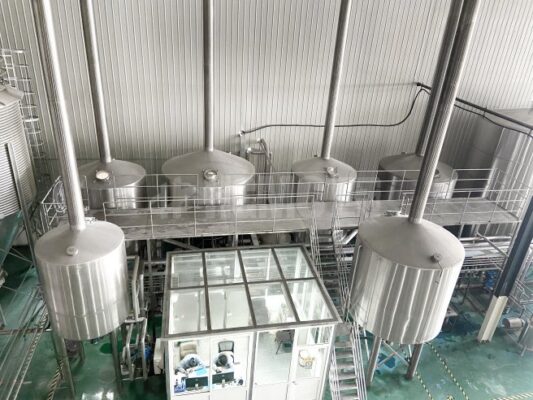
A brewery system is a connected set of tanks, pumps, heat exchangers, piping, valves, controls, refrigeration equipment, and cleaning equipment used to turn malt, water, hops, and yeast into packaged beer. A typical process moves from milling and mashing to lautering, boiling, whirlpooling, cooling, fermentation, conditioning, carbonation, and packaging. Brewhouse sizes range from small pilot systems to commercial plants producing thousands of barrels annually. Temperature, wort volume, gravity, oxygen exposure, cooling capacity, and fermentation time must be controlled at each stage. A well-designed brewery system matches vessel capacity with heating, cooling, cellar, cleaning, and packaging capacity.
The brewhouse does not make the whole brewery productive by itself. A 10 BBL kettle still depends on enough fermenter volume, glycol capacity, cleaning time, and packaging capacity to turn each batch into saleable beer.
The first equipment group normally handles grain. Malt is milled to open the kernel while leaving enough husk material for filtration. The grist is mixed with brewing water in the mash vessel, where enzymes convert starch into soluble carbohydrates. Many brewing programs operate around 62–72°C, with the exact temperature selected according to the intended wort fermentability. A difference of only a few degrees can change the balance between more fermentable and less fermentable carbohydrates.
Mash control leads into lautering because the dissolved extract must be separated from the spent grain. A perforated false bottom or slotted screen supports the grain bed while liquid wort passes through it. Some systems use rakes to regulate the bed. During sparging, additional hot water washes soluble extract from the grain. Flow has to be controlled because very high flow can compact the grain bed and slow drainage.
A commercial brewery may measure wort gravity before and after lautering, because extract recovery provides a more useful operating measure than simply recording how many kilograms of malt entered the mash tun.
The collected wort moves to the kettle, where it is heated to a strong boil. A common kettle cycle lasts roughly 60–90 minutes, although recipe and equipment design can shorten or extend that period. Boiling removes unwanted volatile compounds, concentrates the wort through evaporation, promotes protein reactions, and extracts bittering compounds from hops. Brewers calculate kettle volume against evaporation and transfer losses so the finished batch reaches its planned gravity.
Hop additions are scheduled around the desired beer profile. Early additions generally contribute more bitterness, while later additions preserve more volatile hop compounds. The 2026 Brewers Association guidelines, for example, list American IPA across a broad range of bitterness and alcohol levels rather than defining one fixed recipe, showing why brewery equipment must accommodate different recipes rather than one standard process.
From the kettle, wort may enter a whirlpool vessel or a combined kettle-whirlpool tank. Tangential inlet flow causes the wort to rotate, allowing hop particles and coagulated solids to collect toward the vessel center. The brewer then draws clearer wort from an outlet positioned away from the concentrated trub. Tank geometry, inlet design, residence time, and outlet position all affect wort recovery.
The clarified wort must then be cooled before yeast is added. A plate heat exchanger transfers heat from hot wort to cooling water or chilled fluid through separate stainless-steel channels. Commercial systems can reduce wort from near-boiling temperature to a yeast-ready range during one controlled transfer. Heat recovery also allows warm water leaving the exchanger to be collected for later brewing or cleaning.
In a 20 BBL brewhouse, losing even 5% of wort during transfers represents about 1 BBL per batch. Equipment layout therefore affects usable beer volume as well as processing time.
The cooled wort enters a sanitized fermentation vessel, where yeast converts fermentable sugars into ethanol, carbon dioxide, and flavor compounds. Ale fermentation commonly occurs around 20–21°C for clean-fermenting strains, while lager fermentation often uses approximately 9–14°C. The American Homebrewers Association describes these ranges as typical rather than universal, because yeast strain and beer style can require different temperatures.
Fermentation time also changes the required number of tanks. If a brewery produces four 10 BBL batches per week but a beer occupies a fermenter for 14 days, cellar capacity must cover overlapping batches rather than only one week's brewhouse production. This is why a brewery producing 500 BBL per year and a brewery producing 5,000 BBL per year can require very different tank layouts even when both use similar brewhouse technology.
Cylindroconical fermenters are common because yeast and settled solids can collect in the cone and be removed through the lower outlet. The tanks are usually connected to a glycol cooling system. A temperature sensor monitors beer temperature, while a control valve regulates cold glycol through the jacket. Tank working volume is usually lower than total geometric volume so there is room for fermentation activity and foam.
The glycol system must be sized around simultaneous cooling demand. Cooling six fermenters from 20°C toward a cold conditioning temperature can require far more refrigeration capacity than maintaining six already-cold tanks. A brewery planning to add 30% more fermenter volume should therefore check chiller capacity, glycol reservoir size, pump flow, and jacket performance before adding tanks.
After primary fermentation, beer may remain in the same vessel or move to conditioning equipment. Cold conditioning can encourage yeast and suspended particles to settle. Lager production generally requires longer cold storage than many ale programs; the American Homebrewers Association notes that traditional lagering can continue for 2–3 weeks or longer near 0°C.
Bright beer tanks provide another pressure-rated vessel for conditioning, carbonation, clarification, and packaging supply. Carbon dioxide can be introduced through a carbonation stone, allowing controlled gas absorption. Beer temperature affects carbonation behavior, so breweries usually maintain controlled cold-side temperatures before and during carbonation.
A bright tank also separates cellar production from packaging. When one BBT is supplying cans while another batch is still fermenting, the brewhouse does not need to wait for the filler or kegging station to finish before the next cellar process begins.
CIP, or Clean-in-Place, equipment handles cleaning without removing every product-contact component from the brewery. A typical cleaning program can include pre-rinse, alkaline cleaning, intermediate rinsing, acid treatment where required, and sanitizing. The exact program depends on soil type, chemical concentration, temperature, contact time, surface condition, and equipment design. Cleaning parameters are therefore recorded as process data rather than treated as a single fixed duration.
Sanitary design becomes more important as pipe length and equipment count increase. Dead legs, poor drainage, rough welds, damaged gaskets, and poorly positioned valves can make cleaning less reliable. Stainless-steel product-contact surfaces are widely used because they tolerate repeated cleaning when correctly fabricated and maintained.
Automation adds another layer of control. A manual brewery may rely on operators to open valves, start pumps, read temperatures, and adjust heating. A semi-automatic brewery can control tank temperature and programmed heating steps. A PLC-based system can coordinate valves, pumps, sensors, alarms, and recipe sequences.
The amount of automation should match production requirements. For example, a brewery producing 1,000 BBL annually may not need the same control architecture as a plant producing 10,000 BBL. The Brewers Association defines a U.S. craft brewer as producing 6 million barrels of beer or less annually, but that broad industry definition covers operations with very different equipment scales.
| Equipment | Main process | Typical control points |
|---|---|---|
| Mill | Grain preparation | Crush size, feed rate |
| Mash vessel | Starch conversion | Temperature, time, pH |
| Lauter tun | Wort separation | Flow, bed depth, gravity |
| Kettle | Boiling and hopping | Time, temperature, evaporation |
| Whirlpool | Trub separation | Flow, settling time |
| Heat exchanger | Wort cooling | Flow, outlet temperature |
| Fermenter | Yeast fermentation | Temperature, pressure, time |
| BBT | Conditioning and carbonation | Temperature, CO₂ pressure |
| CIP skid | Equipment cleaning | Chemical, temperature, time, flow |
The table also shows why brewery capacity cannot be calculated from brewhouse size alone. A 10 BBL kettle can theoretically produce multiple batches per day, but the actual number depends on mash and boil cycle time, transfer losses, cleaning, fermentation duration, tank availability, refrigeration, and packaging speed. The slowest required process often determines practical daily output.
A brewery planning three 10 BBL brews per day therefore needs more than a 30 BBL nominal daily brewhouse capacity. If fermentation takes 7–14 days, the cellar must accommodate many overlapping batches. If packaging operates at only half the required rate, finished beer will remain in storage even while the brewhouse continues producing wort.
Utility planning follows the same pattern. Heating can use electric elements, direct fire, or steam. Cooling normally relies on a glycol chiller. Water is needed for brewing, rinsing, cleaning, and heat recovery. Drainage must handle cleaning discharge, wort spills, and rinse water. Electrical service, ventilation, floor loading, ceiling height, and access for maintenance must be considered before installation.
Recipe diversity also affects system design. A brewery producing pale lager, IPA, stout, and high-gravity ale may require different mash programs, hop loads, cooling requirements, and fermentation schedules. The 2026 Brewers Association guidelines list beer categories with widely different original gravities, alcohol ranges, and bitterness levels, so one fixed operating profile cannot represent all commercial beer production.
The process finally reaches packaging. Beer can move from a bright tank to a keg filler, bottle filler, or canning line. Packaging introduces its own requirements for dissolved oxygen control, temperature stability, carbonation, line sanitation, container handling, and throughput. A small filler may package a few hundred containers per hour, while larger lines can operate at several thousand containers per hour, so packaging equipment must be matched to annual production rather than selected separately.
A complete brewery system therefore works as a sequence of linked physical, thermal, and biological processes. Grain handling determines mash performance; mash and lautering determine wort quality; kettle and whirlpool operations determine hot-side processing; heat exchange prepares the wort for yeast; fermentation determines cellar occupancy; conditioning and carbonation prepare beer for packaging; and CIP keeps product-contact equipment ready for the next batch. When equipment volumes and process times are calculated together, a brewery can schedule production around real working capacity instead of nominal tank size.